
Every rental in Utah comes with an obligation you cannot write out of a lease, no matter what the paperwork says. It is called the implied warranty of habitability, and it sets real, specific deadlines for repairs.
With winter approaching and heating complaints about to become a lot more common, this is exactly the right time to make sure your response process actually matches what the law requires.
We manage properties across the Wasatch Front, so getting these timelines right is not optional for us. Here is what the law actually says.
Key Takeaways
- Utah's implied warranty of habitability requires landlords to maintain a fit and habitable rental, regardless of what the lease says.
- Response timelines vary by severity: 24 hours for emergencies, 3 days for legal noncompliance issues, and 10 days for other lease-related repairs.
- Heating problems are treated as some of the most urgent repairs under this standard, especially once cold weather sets in.
- If a landlord fails to respond within the required timeline, tenants can pursue remedies including rent abatement or repair-and-deduct.
- This warranty exists independently of any specific bill, including the failed HB 516 proposal from earlier this year.
What the Implied Warranty of Habitability Actually Covers
Under Utah Code Section 57-22-4, every residential lease in Utah carries an implied promise that the rental will be maintained in a fit and habitable condition throughout the tenancy. This applies automatically. You cannot waive it through lease language, even if a tenant agrees to accept the property as is.
Habitability generally covers functioning heating and plumbing systems, structural safety, working locks, and freedom from serious health or safety hazards. It is a baseline standard, not an aspirational one.
The Response Timelines That Actually Matter
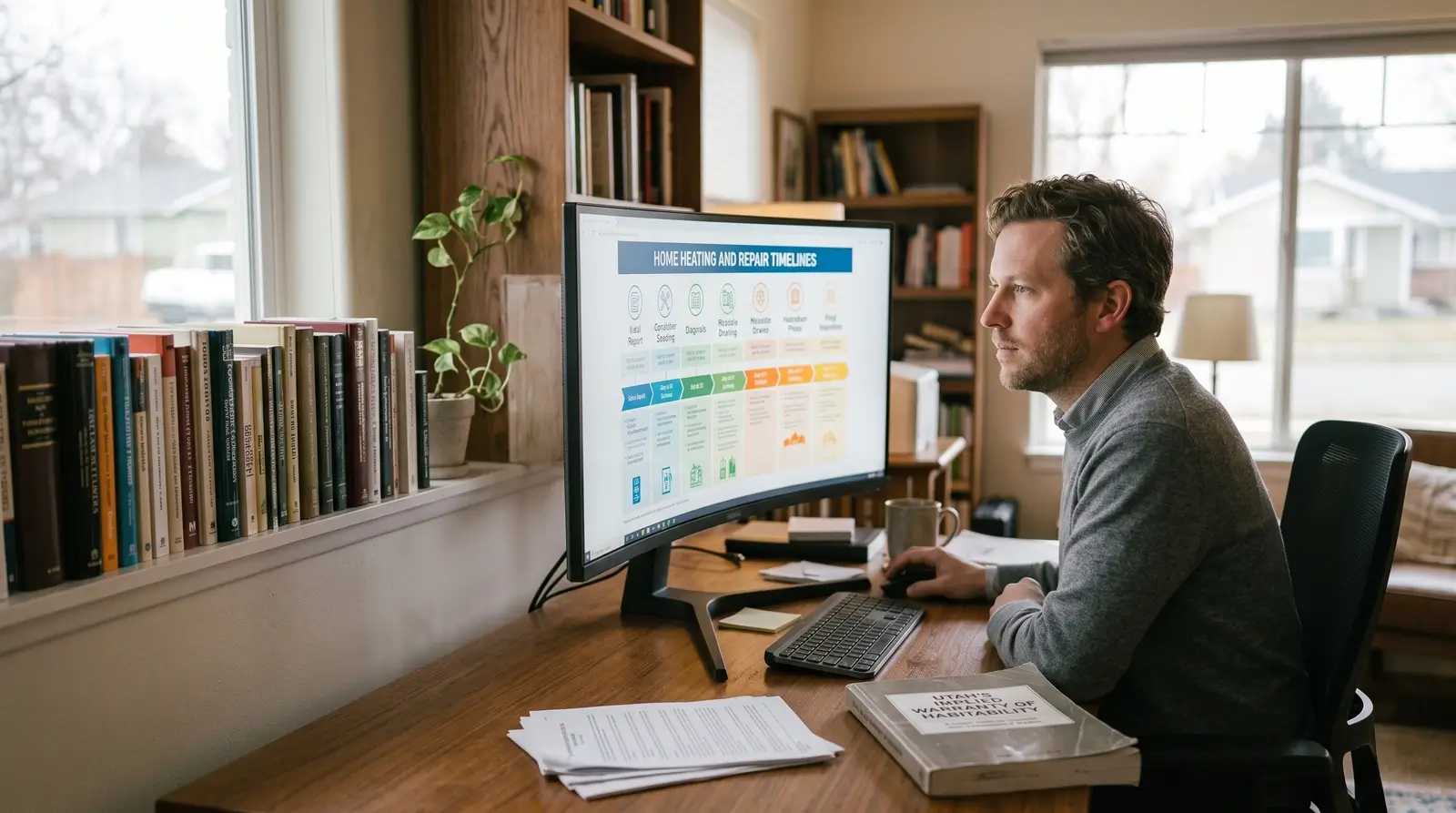
Utah law sets specific windows for how quickly a landlord must respond once properly notified of a problem. Emergencies, like a complete loss of heat in winter or a major water leak, generally require action within 24 hours. Issues involving a legal noncompliance with the lease or code typically require a response within 3 days. Other lease-related repairs generally fall under a 10 day window.
These are not suggestions. They are the standard tenants and courts measure a landlord's response against if a dispute ever goes further.
The clock generally starts once you receive proper notice, whether that comes as a phone call, an email, or a formal written request, so documenting exactly when a request came in matters as much as fixing the issue itself.
Why Heating Complaints Deserve Extra Attention Right Now
As temperatures drop across the Wasatch Front, heating system failures move from an inconvenience to a genuine emergency under this standard. A tenant reporting no heat in December is not a routine maintenance ticket. It is a 24 hour clock.
Our maintenance team treats heating complaints with that urgency specifically because the legal standard demands it, not just because it is good customer service.
This is also the time of year to confirm your furnace and HVAC systems received service before the coldest months hit. A preventable breakdown can put you on the wrong side of a 24-hour clock at the worst possible time.
What Happens If You Miss the Window
If a landlord fails to respond within the required timeframe after proper notice, Utah law gives tenants real remedies. These can include rent abatement, where the tenant pays reduced rent to reflect the diminished habitability, or a repair-and-deduct option, where the tenant arranges the repair themselves and deducts the cost from rent.
Either outcome costs a landlord more than simply responding on time would have. A missed emergency window can also weaken your position significantly if the dispute ends up in front of a judge.
This Standard Exists Separately From HB 516
Earlier this year, some coverage suggested Utah had passed a new repair-and-deduct law under House Bill 516. That bill actually failed in committee and was never enacted. The implied warranty of habitability described here is a separate, already-existing standard under Utah Code 57-22-4, and it remains fully in effect regardless of what happened with that specific bill.
Building a Response System That Actually Works
The safest approach is documenting every repair request with a timestamp the moment it comes in, then tracking your response against the applicable window before it becomes a problem. Our tenant screening and compliance resources stay current on exactly these standards, so owners are not left guessing which clock applies to which situation.
Frequently Asked Questions
Can I include a lease clause that waives the warranty of habitability?
No. This warranty is implied by law and applies automatically, regardless of what the lease says. A clause attempting to waive it would not hold up.
How fast do I have to respond to a heating complaint in winter?
A complete loss of heat is generally treated as an emergency requiring action within 24 hours, given the health and safety risk involved in cold weather.
What can a tenant do if I miss the response window?
Tenants may be entitled to rent abatement or a repair-and-deduct remedy, depending on the situation, if a landlord fails to respond within the required timeframe after proper notice.
Is HB 516 currently the law in Utah?
No. HB 516 failed in committee during the 2026 legislative session and was never enacted. The implied warranty of habitability discussed here exists independently under Utah Code 57-22-4.
Does this warranty apply to every rental in Utah?
Yes. It applies automatically to residential leases across the state and cannot be waived through lease language.
Let Us Keep Your Response Times on the Right Side of the Law
Utah's habitability standard is not new, and it is not going away. What changes year to year is how consistently landlords actually track and meet these timelines, especially once the weather turns.
At TierOne Real Estate, we build repair tracking and response timing into our standard process for every Wasatch Front property we manage. If you want your current maintenance response system reviewed, request a free rental analysis, or explore our owner resources to see how we help owners stay ahead of this standard.